
A Letter from Your Cleaners – 5
-A Shinchon Love Song, Part 3
Shin-jak-ro (newly paved main roads) and Mun-an (inside the ancient city gates)—these were expressions frequently used by our generation in Shinchon, but they vanished rapidly after the construction of the Second Han River Bridge. This was because new roads were opening and widening in every direction. The old phrase “going inside the city gates,” which referred to entering the four main gates of historic Seoul, was lost as well. Instead, people began to use the word Si-nae (downtown), and Shinchon itself was already transforming into a bustling center of the city. Naturally, we graduated from our old neighborhood games like milk-carton slapping, marble shooting, tag, hide-and-seek, and stone striking.
I don’t have many distinct memories from my middle school years. Around that time, my greatest joy was visiting the April 19th Memorial Library in Seodaemun. My father’s printing shop was thriving more and more with each passing day. Once an offset printing press was brought in, it turned into a genuine printing plant capable of producing full-color prints. Yet, from around that period, my father’s shop began to feel distant from my own life. With young errand boys of my own age newly hired, alongside professional printing technicians and apprentices engraving stamps, there was simply no longer a proper place for me to work in my father’s store.
I had a close, inseparable friend named Sang-tae who lived near the Independence Gate (Dongnimmun). Back then, before the Sajik Tunnel was built, Sang-tae and I would always walk together to Shinmun-ro after school. From there, we would catch our respective buses heading to Shinchon and Dongnimmun. One particular day, without either of us suggesting it first, we instinctively agreed to walk a bit further to Seodaemun. It was during that walk that we discovered the April 19th Memorial Library.
That was the place where I first encountered novels. From that very day, the moment school let out, I would sprint toward that library. I even grew distant from my friend Sang-tae. Beginning with the pioneering author Yi Kwang-su and moving on to Hwang Sun-won, Jeong Bi-seok, and Chang Yong-hak, I found myself completely captivated by the stories I had read the day before, even during my school classes. Reading Hermann Hesse’s Demian without fully understanding its meaning, alongside Dale Carnegie’s How to Win Friends and Influence People and the life of Mahatma Gandhi—these books were my true joy. Meanwhile, my neighborhood friends in Shinchon spent most of their time centered around the church.
As we became high school students, a visible shift began to take place among the neighborhood friends. Distinct layers began to form. Divisions based on academic tiers emerged—first-rate, second-rate, and third-rate schools—and alongside them, social classes split between the wealthy families and the impoverished ones.
Sneakers. Around that time, my shoes were relentlessly a pair of black “Malpyo” (Horse Brand) sneakers. Of course, there were some children at school who wore proper student oxfords, which we called “short shoes,” but the vast majority of us wore black Malpyo sneakers just like me. However, on Sundays, when we went to church, the story changed completely. From student oxfords to the various patterned athletic sneakers that were just beginning to flood the market, the other children started showing off their modern sports shoes.
Once the church meetings ended, the kids would flock together to the newly opened snack bars. I, however, consistently wore my Malpyo sneakers, firmly believing that eating the three daily meals prepared by my mother was the only proper way to live. One day, while a group of us kids were hanging out together, a pale-faced girl cast a glance toward me and remarked in front of everyone, “Look at him, he always wears those countrified Malpyo sneakers!” The other children burst into a chorus of giggles at her single comment.
I stuck stubbornly with those Malpyo sneakers all the way until my high school graduation. During my college years, I would even wear a pair of white Malpyo rubber shoes to school.
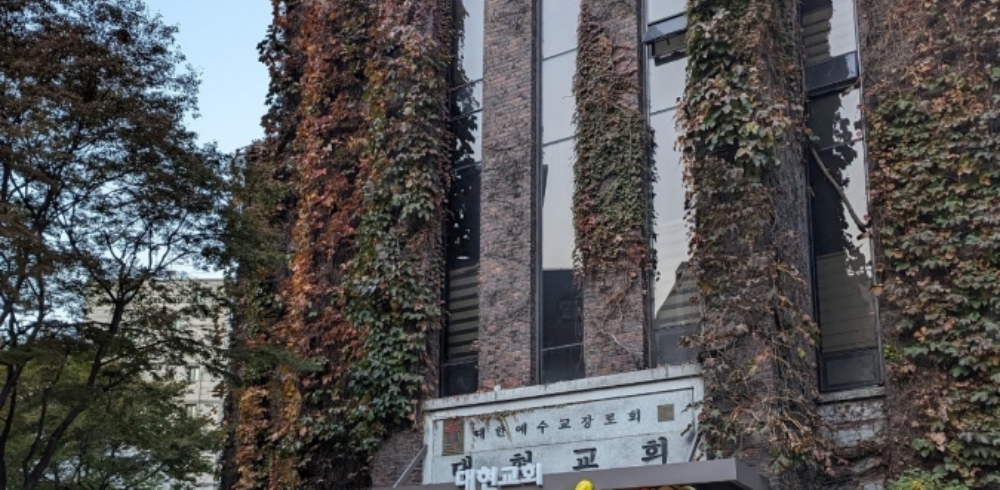
It was during those youth days that I met a few mentors who left a lifelong impact on me. First was Pastor Hwang In-gi of the Shinchon Daehyun Church. He was the one who taught me about the suffering of Jesus. He was so incredibly passionate that anyone standing close to him would receive a literal shower of his spit during his sermons. It was entirely thanks to him that I built the foundation to contemplate profound theological dilemmas later in life as my mind matured. I also remain deeply indebted to Professor Park Dae-wi and Professor Lee Yeol-mo. One day, Professor Park gathered us short-haired high school boys and offered this prayer: “Please grant these children wisdom. These boys are the future of this nation. Now is their time to study. When these children sleep, please keep them from sliding their hands inside their underpants.” The other professor, while looking out over the Han River and Jeoldusan Martyrs’ Shrine from his study window, would stir our souls by murmuring, “Ah, am I truly worthy of enjoying such a luxury in an era like this?” There was also Elder Choi Chang-han, who awakened our minds to the profound value of time by constantly reminding us, “Never forget that you are currently enjoying your Golden Age.” I am uniquely grateful to this gentle elder because he approached my father—a man who lived without a single companion—and became a true friend to him.
And then, there was my high school homeroom teacher, Mr. Kim Ki-young. Attending a commercial high school back then, I was a terribly poor student. To begin with, I absolutely detested using the abacus; instead, I would drop it on the floor to use as a makeshift roller-skate, which regularly earned me a sharp rap on the knuckles from the teachers. During typing class, I would constantly get caught reading novels, resulting in my head being struck repeatedly with the typewriter roller—a piece of dense rubber imported from India. My grades were always far faster to count if you started from the very bottom of the class rank. One day during my sophomore year, Mr. Kim, who taught English, called me into his office and offered these words: “You are not too late yet. Study hard and go to college. Whether you choose to write literature or study linguistics, you must go to college.” In that gentle way, he laid out a concrete path for my life. Years later, after I graduated, the high school Mr. Kim transferred to happened to be the very one my wife was attending. Thus, he was my wife’s English teacher as well.
Ah! It was also around that time that I frequently caught glimpses of my wife’s face on her way home from school, inside the buses or along the streets near the Ewha Womans University overpass, where banners reading “The Glorious 1970s” were beginning to be hung across the city.
Dae-ya-seong, Bok-ji, Campus, Dok-su-ri… these are the names of the old teahouses where I spent quite a fortune on tea. And Nu-na-ne Jip (Sister’s House), Fedra, Tae-jeong Sik-dang… these are the names of the taverns where I handed over a considerable amount of pocket money for bowls of rice wine. My memories of them remain crystal clear. For a full decade, my college life was bound entirely to Shinchon. Yet, during all those university years, there was never a single year where I actually managed to attend a full semester of classes properly.
Sending my eldest daughter off to a quiet marriage after she graduated from nursing school, and making my son a university professor… these humble dreams of my father were shattered, not by anyone else, but by the reckless paths my sister and I chose almost simultaneously.
Just as she was on the verge of graduating from college, my older sister suddenly declared her exodus from Shinchon. “Once I graduate, I am leaving for the United States on a working visa,” she announced. Even my stubborn mother could not bend her will. My sister boarded that flight to America without a backward glance. It was then that my father’s hair began to turn gray. One sudden day, detectives abruptly barged into our home searching for his son. Even then, my father calmly reassured himself, “It cannot be anything too serious.” But as he began to spend his days drifting from police stations to holding cells and detention centers to visit his son, his hair turned completely white before anyone realized it. Even as he watched his son trapped inside a small, dark room after being expelled from school, my father refused to surrender his dreams. In May of 1980, just as the world was shifting and my father was trying to revive those dreams, he was dragged away to a terrifying place solely because of his son who had gone into hiding, where he was subjected to a brutal interrogation. After that ordeal, my father bitterly cursed the very Hwarang Military Merit Medal he had always been so proud of, and began packing our bags. That was the year of my mother and father’s sudden exodus from Shinchon.
On the rare occasions I wandered through the streets of Shinchon afterward, it was no longer the place of my childhood. A few years after my father had left Shinchon, a piece of paper was thrust before me, dismissed by the authorities as a mere formality. It was a written pledge of submission. After pressing my thumbprint onto that paper, I was finally handed a Republic of Korea passport. That very night, my mother called me from America, her voice filled with desperate urgency over the phone lines: “Son! Do not bring a single book with you! Not even one! Just pack the roughest work clothes you can find for hard labor, and come!”
And just like that, I left Shinchon.
Recent Comments